Who is Usher Raymond III? The Untold Story of the Father Behind the R&B Legend

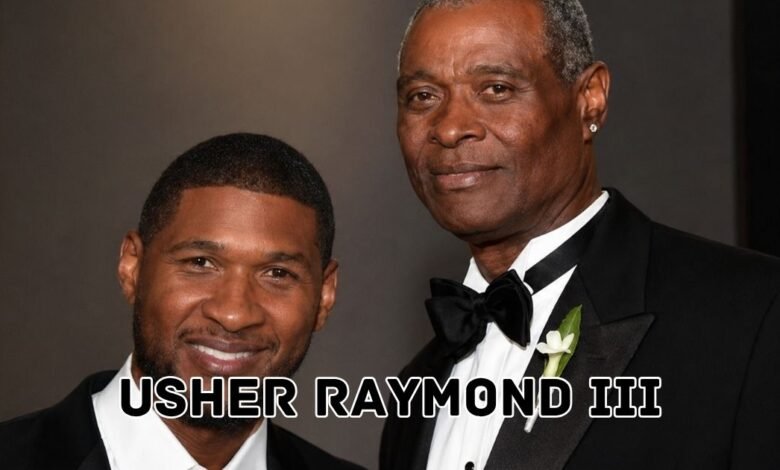
The name Usher Raymond III often sparks confusion. Many assume it belongs to the Grammy-winning singer Usher. In reality, Usher Raymond III is the father of the global icon Usher Raymond IV. His life was marked by struggle, absence, and a complicated legacy. This article sheds light on who Usher Raymond III truly was, his background, and his relationship with his famous son. It separates fact from fiction and explores the man behind the name.
Quick Bio
| Attribute | Details |
|---|---|
| Full Name | Usher Raymond III |
| Born | November 9, 1962 |
| Died | July 22, 2008 |
| Age at Death | 45 years |
| Occupation | Businessman, caretaker |
| Known For | Being the father of singer Usher Raymond IV |
| Children | Usher Raymond IV (son) |
| Cause of Death | Diabetes complications |
Who Is Usher Raymond III?
Usher Raymond III is the biological father of Usher Raymond IV, the iconic R&B singer. He was born on November 9, 1962, in Chattanooga, Tennessee. His life was largely private, overshadowed by his son’s fame. He worked as a businessman and later as a caretaker. His relationship with his son was strained and distant, a source of pain for both. Despite this, his name remains part of the singer’s identity. Understanding him requires looking beyond the headlines. He was a man with dreams, flaws, and a story that is often misunderstood.
Usher Raymond III’s early years were spent in a modest household. He grew up in a community that valued hard work and resilience. He attended local schools but did not pursue higher education. Instead, he entered the workforce early, taking on various jobs to support himself. His path crossed with Jonetta Patton, Usher’s mother, and together they had a son. Their relationship was brief, and they parted ways soon after Usher’s birth. This separation laid the foundation for the complex father-son dynamic that would define much of Usher Raymond III’s legacy.
Many people mistakenly believe that Usher Raymond III is the singer himself. This confusion arises because the singer’s full name is Usher Raymond IV, but he is commonly known simply as Usher. The father’s name is identical except for the generational suffix. In legal documents and public records, the distinction is clear. However, in popular discourse, the two are often conflated. This article aims to clarify that Usher Raymond III is a separate individual with his own life story. His identity is not merely an extension of his son’s fame.
Early Life and Background of Usher Raymond III
Growing up in Tennessee, Usher Raymond III faced many challenges. His family had limited financial resources, and he learned to be self-reliant from a young age. He developed a strong work ethic, which he carried into adulthood. Friends described him as charismatic but reserved. He enjoyed music and sports, but these were hobbies rather than career paths. His primary focus was on building a stable life, despite the odds stacked against him.
As a young man, Usher Raymond III moved to Atlanta, Georgia, seeking better opportunities. It was there that he met Jonetta Patton. Their relationship was passionate but short-lived. When Jonetta discovered she was pregnant, the couple tried to make it work, but differences drove them apart. Usher Raymond III did not play a significant role in raising his son. He visited occasionally but was largely absent. This absence would become a central theme in the singer’s narrative, influencing his music and personal outlook.
Usher Raymond III’s professional life was varied. He worked in sales, managed small businesses, and even served as a caretaker for elderly relatives. He was not wealthy and struggled financially at times. Despite these hardships, he maintained a sense of dignity. He was known as a man who kept to himself, rarely seeking the spotlight. His life was ordinary in many ways, yet it intersected with extraordinary fame through his son.
Relationship with Usher Raymond IV
The relationship between Usher Raymond III and his son was fraught with distance. After the separation from Jonetta, Usher Raymond III was not a constant presence in the singer’s life. He would appear sporadically, often causing more confusion than comfort. The young Usher, raised by his mother and grandmother, grew up without a stable father figure. This void profoundly shaped his character and artistic expression.
Usher Raymond IV has spoken publicly about his father’s absence. He described the pain of not having a father to guide him through childhood. In interviews, he recalled moments when his father would show up unexpectedly, only to disappear again. These experiences left deep emotional scars. They also fueled his determination to be a better parent to his own children. The father-son dynamic became a recurring motif in Usher’s songs, with tracks like “Confessions Part II” hinting at the complicated legacy.
Despite the estrangement, there were attempts at reconciliation. As Usher Raymond IV’s fame grew, he tried to reconnect with his father on several occasions. However, trust had been broken, and the two never fully bridged the gap. Usher Raymond III’s health problems also strained any potential rebuilding. By the time the singer was ready to forgive, his father was already battling serious illnesses. Their relationship remained unresolved until the end.
The Absence of a Father Figure
The lack of a father figure in Usher’s life is a well-documented chapter. It influenced his views on love, responsibility, and family. He often credits his mother and grandmother for filling the void. Yet the absence was palpable. In his memoir and public speeches, Usher reflects on how not having his father around made him more empathetic and driven. He learned to find strength in adversity, a lesson he passes on to his fans.
Usher Raymond III’s absence also had practical consequences. Without a father’s guidance, Usher navigated the music industry largely on his own. His mother, Jonetta, became his manager and protector. The singer has stated that his father’s absence made him hungry for success, as if to prove his worth. This narrative adds a layer of complexity to the singer’s story, showing that even broken relationships can be sources of inspiration.
It is important to note that Usher Raymond III was not entirely without influence. He instilled certain values in his son during their brief interactions. For example, he taught Usher about the importance of hard work. He also shared his love for music, though it was not a shared passion. These small but meaningful moments are often overlooked. They serve as reminders that even absent fathers can leave a mark, however faint.
Usher Raymond III’s Personal Struggles
Usher Raymond III faced significant personal challenges throughout his life. Financial instability was a constant burden. He struggled to maintain steady employment and often relied on help from family. Health issues also plagued him, particularly in his later years. He was diagnosed with diabetes, a condition that eventually led to severe complications. His struggle with the disease was largely private, as he preferred to handle his problems alone.
In addition to health problems, Usher Raymond III battled with a sense of regret. He was aware of his shortcomings as a father and seemed to carry that weight. Friends and acquaintances reported that he sometimes expressed remorse for not being more present. However, he lacked the tools or support to make amends. This internal conflict added to his isolation. He lived a quiet life, often moving between residences, disconnected from his son’s world.
Substance use was not a known issue for Usher Raymond III, unlike some other celebrities’ parents. He remained clean of drugs and alcohol, which was a point of pride. Yet his life was far from easy. He dealt with loneliness and the stigma of being a separated father. Society often judges absent parents harshly, and he felt that judgment. Still, he rarely defended himself publicly, preferring to stay out of the media’s gaze.
The Legacy of Usher Raymond III
Usher Raymond III left behind a complicated legacy. On one hand, he is remembered as the father who was not there. This narrative dominates public perception. On the other hand, he is part of the foundation of a musical dynasty. Without him, there would be no Usher Raymond IV. Biologically and legally, his name carries on through his son’s success. This duality makes his story one of both loss and continuity.
In the context of popular culture, Usher Raymond III is often referenced in a negative light. Articles about Usher’s difficult childhood frequently mention his father’s absence. But there is a human side to the story. He was a man who made mistakes and perhaps wished for redemption. His death in 2008 closed the chapter permanently. Since then, the singer has spoken more openly about forgiveness, indicating a healing process that transcends the grave.
The legacy also extends to how the Usher family name is perceived. Usher Raymond IV named his own sons to honor family tradition, including Usher Raymond V. This shows that despite the pain, the father figure is acknowledged. The younger generations carry the name forward, intertwining the legacy of Usher Raymond III with the future. It is a testament to the enduring power of lineage, even when relationships are flawed.
Common Misconceptions About Usher Raymond III
Many misconceptions surround Usher Raymond III. The most common is that he is the singer himself. This confusion is understandable but inaccurate. Usher Raymond III was a private individual, not a celebrity. Another misconception is that he abandoned his son entirely. While he was largely absent, he did make intermittent efforts to stay in touch. He was not the evil figure that some portrayals suggest. Rather, he was a flawed man struggling with his own demons.
Some believe that Usher Raymond III was wealthy or influential. In truth, he lived a modest life. He did not benefit financially from his son’s fame. In fact, he maintained a low profile to avoid unwanted attention. Another myth is that he died under mysterious circumstances. The cause of death was clearly diabetes-related complications, not foul play. These misconceptions highlight the danger of assuming details without verified sources. The facts of his life are more nuanced than sensational stories suggest.
Finally, there is a misconception that Usher Raymond III had no impact on his son’s music. While the direct influence was limited, his absence became a creative force. Usher’s songs about heartbreak and abandonment often resonate because they are rooted in real experiences. The father-son relationship, though strained, provided raw material for art. It is a reminder that even negative experiences can contribute to something meaningful.
The Impact on Usher’s Music and Life
Usher Raymond IV has often said that his father’s absence taught him valuable lessons. He learned independence and self-reliance at a young age. These traits fueled his rise to stardom. In his songs, themes of missing fathers, broken homes, and the search for love are prominent. The emotional depth of hits like “Burn” and “U Got It Bad” comes partly from personal pain. Knowing the background of Usher Raymond III adds context to these lyrics.
The singer’s relationship with his own children is also shaped by his father’s example. Usher has stated that he wants to be present for his sons in ways his father was not. He prioritizes family time and involvement. This conscious effort to break the cycle is a positive outcome. It shows that even a difficult legacy can inspire change. The impact of Usher Raymond III thus extends beyond his lifetime, influencing the next generation positively.
In interviews, Usher has rarely expressed anger toward his father. Instead, he speaks with a sense of melancholy and understanding. He acknowledges that his father was a product of his own circumstances. This mature perspective helps fans see the humanity in both father and son. It also adds depth to the singer’s public persona. The story of Usher Raymond III is not just background noise; it is an integral part of the singer’s narrative arc.
Later Years and Passing
In his later years, Usher Raymond III’s health declined significantly. Diabetes led to complications including kidney failure. He spent time in and out of hospitals. During this period, he had limited contact with his son. The two had not fully reconciled, and distance remained. However, in the months before his death, there were attempts to mend fences. Usher Raymond IV visited his father and tried to provide support. It was a bittersweet effort to bridge a gap that had widened over decades.
Usher Raymond III passed away on July 22, 2008, at the age of 45. His death was confirmed by family members. The news was met with a mix of sadness and reflection. The singer canceled some performances to grieve privately. He later spoke about the experience, saying it was a time of healing. The funeral was a small, private affair. It reflected the man’s desire for a low-key exit from a life that had been largely out of the spotlight.
After his death, Usher Raymond IV took time to process his feelings. He acknowledged the complexity of their relationship. In a statement, he expressed gratitude for the lessons learned. He also urged others to cherish their family ties. The passing of Usher Raymond III closed a chapter but opened a new one for the singer, who began focusing on fatherhood with renewed vigor. The legacy of pain transformed into a legacy of purpose.
Lessons from the Story of Usher Raymond III
The story of Usher Raymond III offers several takeaways. First, it highlights the importance of presence in a child’s life. Even small acts of involvement can have lasting effects. Second, it shows that forgiveness is possible, even after deep wounds. Usher’s ability to speak publicly without bitterness is a model for others. Third, it reminds us that every person has a story that deserves to be told with nuance. Easy judgments often miss the truth.
Another lesson is about the power of legacy. Names carry weight across generations. Usher Raymond III’s name lives on through his son and grandchildren. This continuity provides a sense of immortality. It also shows that a person’s impact is not always measurable by conventional standards. A flawed life can still contribute to something larger. Finally, the story teaches that art can emerge from suffering. Usher’s music is a testament to channeling pain into creativity.
In a broader sense, the narrative of Usher Raymond III and his son is universal. Many families experience estrangement. Many children grow up without fathers. The story offers no easy answers, but it does offer hope. It proves that healing is a journey, not a destination. Whether through therapy, art, or faith, people can find ways to cope. The Raymond family’s experience serves as a mirror for society’s complex relationships.
Frequently Asked Questions About Usher Raymond III
1. Who exactly is Usher Raymond III?
Usher Raymond III is the biological father of the famous R&B singer Usher Raymond IV. He was born in 1962 and died in 2008. He lived a private life and was not involved in the entertainment industry. His name often causes confusion because the singer is known as Usher, but legally the father shares the same name with a generational suffix. He was a businessman and caretaker by profession. His relationship with his son was strained due to his absence during the singer’s childhood.
2. Did Usher Raymond III abandon his son?
The term “abandonment” is strong, but it reflects a reality of absence. After separating from Jonetta Patton, Usher Raymond III did not have a consistent role in raising his son. He would visit occasionally, but he was not a daily presence. The singer has described feeling fatherless. However, the father never completely disappeared; he maintained sporadic contact. The relationship was more distant than fully abandoned. Both parties had mixed feelings about each other. The truth lies in the gray area of a complicated bond.
3. How did Usher Raymond III die?
Usher Raymond III died on July 22, 2008, from complications of diabetes. He had struggled with the disease for several years, and it led to kidney failure and other issues. His death was not sudden but a result of long-term health decline. He was only 45 years old. The singer was present in the final days and helped with medical arrangements. The cause of death is well-documented and not controversial. It marked the end of a life full of challenges.
4. What was Usher Raymond III’s relationship with his son like in the end?
In the years leading up to his death, Usher Raymond III and his son had a fragile connection. There were attempts at reconciliation, especially after the father’s health worsened. Usher Raymond IV visited and provided financial support. They shared some meaningful conversations. However, the decades of distance could not be erased completely. The singer has said that he forgave his father before he passed. This allowed for a sense of closure, even if the relationship was never fully healed. It was a bittersweet end.
5. Does Usher Raymond III have any other children?
Public records indicate that Usher Raymond III had only one child: Usher Raymond IV. There are no verified reports of other biological children. The singer himself has no known half-siblings from his father’s side. Usher Raymond III’s family tree is small, centered on his son and his own parents. This simplicity contrasts with the dramatic narrative of his life. It also makes his legacy singular: he is remembered as the father of one of the most successful R&B artists in history.